
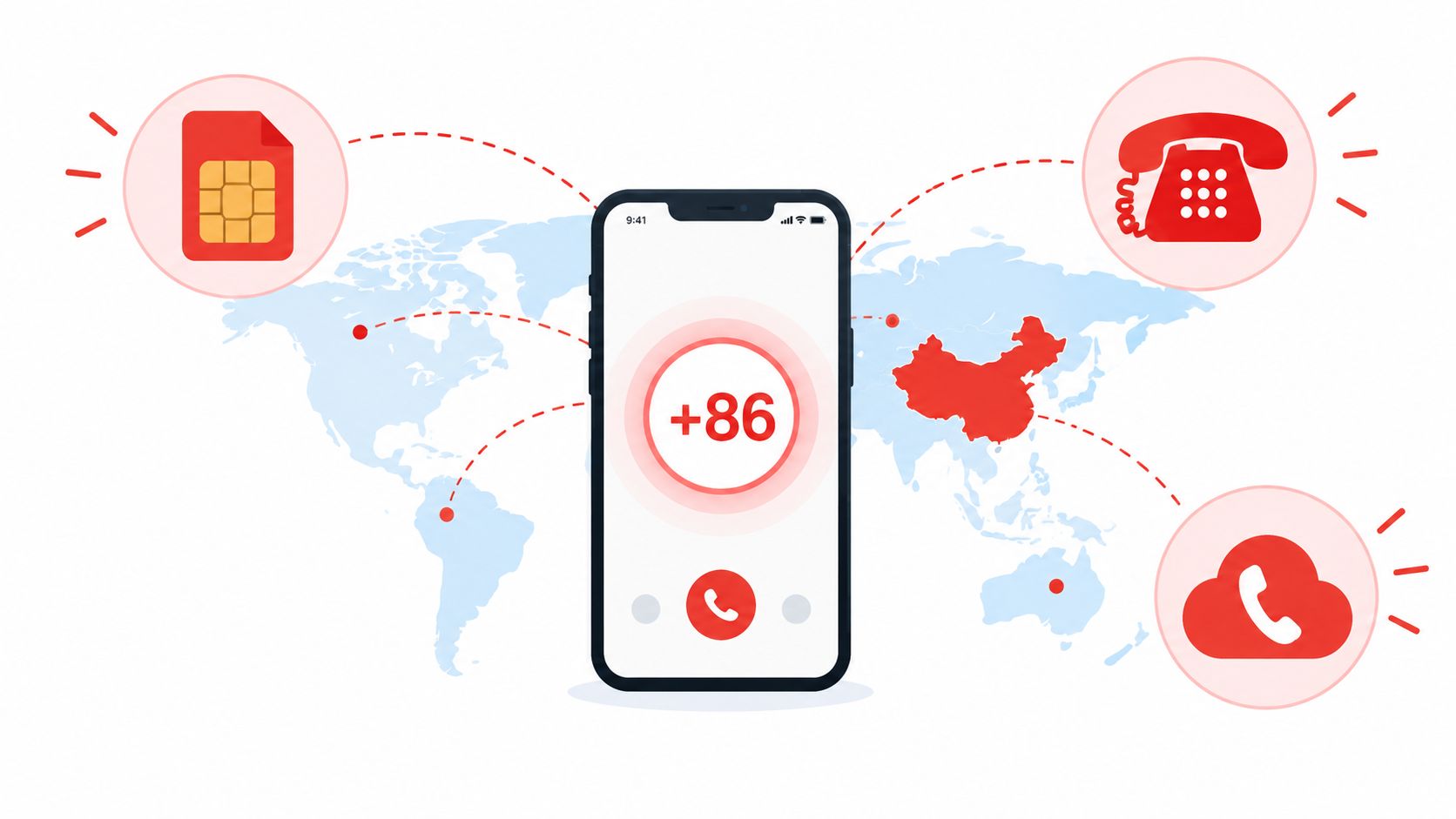
Getting a China virtual number is easy, but using it reliably is not. China's MVNO pilot started in January 2013, and by the end of 2016 more than 40 MVNOs had a combined user base of over 43 million users, yet many foreign users still find that a rented +86 number works for one app and fails for another.
That gap is why so many people end up frustrated after a simple SMS code request turns into a dead end. You can receive a message and still not have a number that supports durable account access, recovery, or regulated service use.
Why Virtual Numbers in China Are Not What You Expect
A foreign founder lands in Shenzhen, opens a laptop at the hotel, and tries to activate a new account for work. The SMS code arrives once, then the next platform rejects the same virtual number China service outright. WeChat may stop at verification, Alipay can be stricter, and the number that looked fine in a checkout flow can still fail for identity checks or recovery.
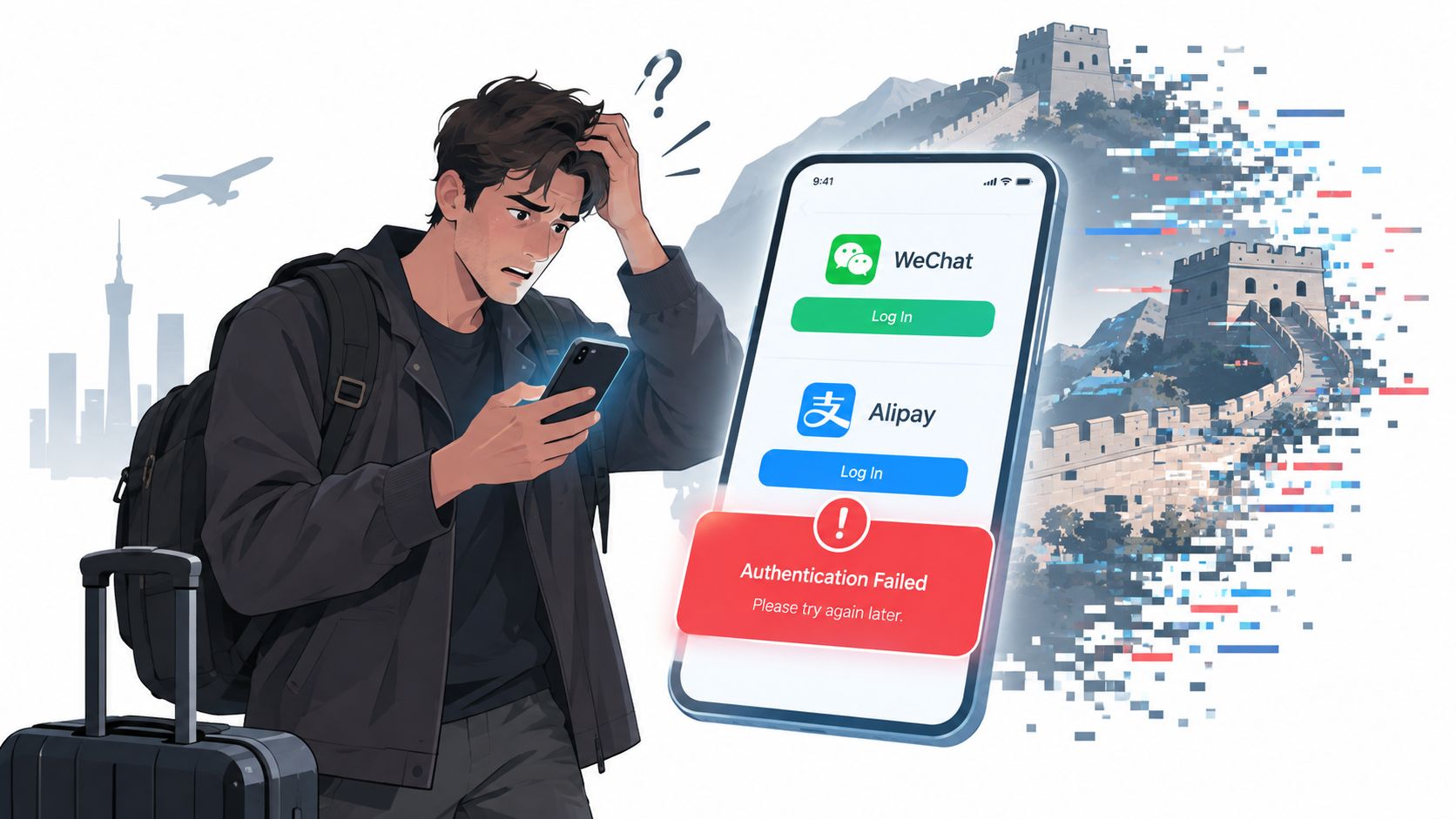
Why receiving a code is only the first step
Many readers assume the goal is to get a Chinese number. The harder part is whether that number satisfies a platform's checks for line type, routing metadata, carrier provenance, and identity. A number can accept a one-time password and still fail for banking, government, or higher-risk commerce.
China's numbering system also works differently from the consumer internet model many international users expect. Mainland mobile numbers use +86, but the prefix alone does not prove the line ends on a genuine mainland mobile network. That distinction matters because an app may accept a local-looking number at first and still treat it differently once it checks how the line is delivered.
Practical rule: treat the number as an identity-bearing asset, not a throwaway code receiver.
China's mobile market is large, so small access differences affect many users. later market context from MIIT reporting places the country's mobile subscriber base at about 1.306 billion. The early MVNO rollout and subscriber growth also shows how virtual operators grew into a meaningful part of the market, with 50 million subscribers by year-end 2017 and a 3.5% share of mobile connections. That scale explains why providers exist, and why platforms keep a close watch on fraud, reuse, and account risk.
The result is straightforward. A number that works for a casual signup may still be wrong for long-term ownership, recovery, or regulated use.
Understanding How Chinese Virtual Numbers Work
A foreign buyer often starts with a simple goal, receive a Chinese SMS code, then discovers that code delivery is only the first checkpoint. The harder question is whether the number can support continued access, recovery, and account trust after the first login.
China's virtual-number market did not grow as a standalone internet-telephony shortcut. It came from MVNO reform, where private companies were allowed to resell mobile services through the three nationwide operators. That origin matters because the more legitimate forms of virtual numbering in China depend on licensed carrier partnerships, not a separate numbering universe. The regulatory foundation is described in the MVNO launch materials.
Three categories readers need to separate
A practical way to read the market is by how the number is delivered:
| Number Type | Reliability for Verification | Compliance Status | Best For |
|---|---|---|---|
| Carrier-issued mobile number | Highest | Strongest fit when properly registered | Long-term ownership and regulated use |
| Hosted business line through a licensed provider | Medium to high | Depends on documentation and registration model | Business messaging and voice workflows |
| Anonymous public SMS inbox | Lowest | Weakest fit for serious account use | Disposable testing with high failure risk |
This difference is more than technical. Apps can look at whether a line resembles a real mobile subscriber, whether it comes from a carrier-backed path, and whether the number has been reused too broadly. A service that only hands you a code-receiving endpoint is not the same thing as a number you can rely on later.
Why the +86 prefix is not enough
A +86 number can still be misleading if the underlying service does not document carrier termination. The better question is not just whether the number has a Chinese country code, but where the line terminates, who owns it, and what happens if you need SMS recovery later.
A number that works once is not automatically a number you can keep using.
Many users lose time here. They choose the easiest checkout path, then discover that the number was never designed for durable account access. If you are checking the infrastructure behind a provider, the AWall SMS firewall project is a useful reminder that routing and verification controls matter as much as the visible phone number.
Navigating China's Real-Name Registration Requirements
China's telecom rules make identity handling part of the product design, not an afterthought. Article 9 of the PRC Anti-Telecom and Online Fraud Law requires telephone-user real-identity registration, and Article 13 requires operators to regulate authentic calling-number delivery and to block, intercept, trace, and verify spoofed or irregular calls. The law text and official explanation are published here.
Why SMS success doesn't mean service approval
This is the point that catches foreign users off guard. An SMS one-time password may arrive for a routine app, but that does not mean the number can satisfy banking, government, or other high-risk workflows. Those services may check more than message delivery. They may care about number history, carrier signals, risk scoring, and the identity model behind the line.
That's why a legitimate deployment has to distinguish among carrier-managed numbers, hosted business lines, and anonymous inboxes. Each one has different traceability and different failure modes. A line that can receive a code is not automatically suitable for recovery, payments, or regulated onboarding.
Real-name policy also changes the privacy story
The privacy angle became more complicated in July 2025, when China introduced a voluntary cyber-ID system designed to let users verify without directly disclosing their real name and ID number to websites. Reporting on the cyber-ID rollout shows why the old “virtual numbers equal anonymity” pitch is too simple.
A rented number may hide your personal SIM from a website, but it can still be controlled by a provider, shared or recycled, visible in a public inbox, or linked to identity records held by the carrier. So the practical standard is not “anonymous access,” it's documented handling, consent, and fallback planning.
What compliant use looks like
For international teams, the safer pattern is straightforward:
- Document the registration model: Know whether the line is carrier-issued, hosted, or public.
- Get user consent: Be clear about identity and message handling.
- Plan fallback authentication: Don't let one number become the only recovery path.
- Avoid bypass messaging: Never market a virtual number as a way to evade identity checks.
If your project involves onboarding or identity-heavy workflows, the registrant prep project is a useful reference point for thinking about compliance before launch.
How SMS Activate Can Help
Different providers solve different parts of the problem. SMS Activate is useful when the goal is narrow and practical, namely receiving SMS verification codes without exposing a personal number. Its appeal is that it focuses on on-demand verification, which fits short-cycle signups, testing, and account validation where you don't want your main line involved.
Where it fits in the provider landscape
Carrier-backed MVNOs are the stronger choice when you need a number that behaves like a real subscriber line. VoIP and international aggregation services are better when you need scale, routing options, or business calling features. SMS Activate sits closer to the verification end of the spectrum, where speed and convenience matter more than deep account ownership.
Its strengths are easy to understand:
- Disposable virtual numbers for one-time SMS receipt
- Long-term rentals when you need a number for hours, days, or longer
- Pay-per-use access instead of a standing subscription
- Wide platform support for verification flows
- Fast code delivery through a dashboard
That makes it useful for privacy protection, testing, and low-friction verification. It's less useful when a platform expects durable identity proof, stable recovery access, or a number tied to a stronger registration model.
If you want a practical starting point, the provider's virtual phone numbers for China page is a reasonable place to compare the basic verification use case against your own workflow.
Use this kind of service for verification tasks, not as a substitute for a proper account ownership strategy.
Choosing the Right Provider for Your Use Case
The wrong question is, “Where can I rent a +86 number?” The right question is, “What am I trying to satisfy, signup, recovery, messaging, voice, or a regulated identity check?” Once you answer that, the provider choice becomes much clearer.
Match the provider to the job
| Use Case | Recommended Provider Type | Key Verification Check | Risk Level |
|---|---|---|---|
| Ordinary app sign-up | SMS verification service or basic hosted line | Does the code arrive once, reliably? | Medium |
| Long-term account ownership | Carrier-backed or well-documented hosted number | Can I recover the number later? | Lower |
| Payment activation | Strongly documented compliant provider | Does the service accept the identity model? | High |
| Business or regulated use | Carrier-backed MVNO or enterprise line | Is ownership, tracing, and fallback documented? | Highest |
This is why recycled numbers cause so many problems. A number that was already used by someone else can trigger account-recovery failures or “already used” errors. Public inboxes create a different problem, because anyone who sees the page can see the code. Neither option is ideal if the account matters.
What to verify before you buy
The provider checklist should be boring and strict:
- Carrier termination documentation: Don't settle for vague claims.
- Inbound SMS support: Confirm messages are receivable.
- Voice capability: Only if your use case needs calls.
- Ownership clarity: Know who controls the line and for how long.
- Recovery procedures: Ask what happens if the number is lost or rotated.
If the provider can't answer those questions cleanly, it's probably fine for a throwaway test and weak for anything you care about. For teams building messaging or authentication workflows, the global CPaaS for messaging, voice, and authentication project is a useful lens for comparing infrastructure quality across vendors.
Practical Steps for Acquiring and Using Chinese Virtual Numbers
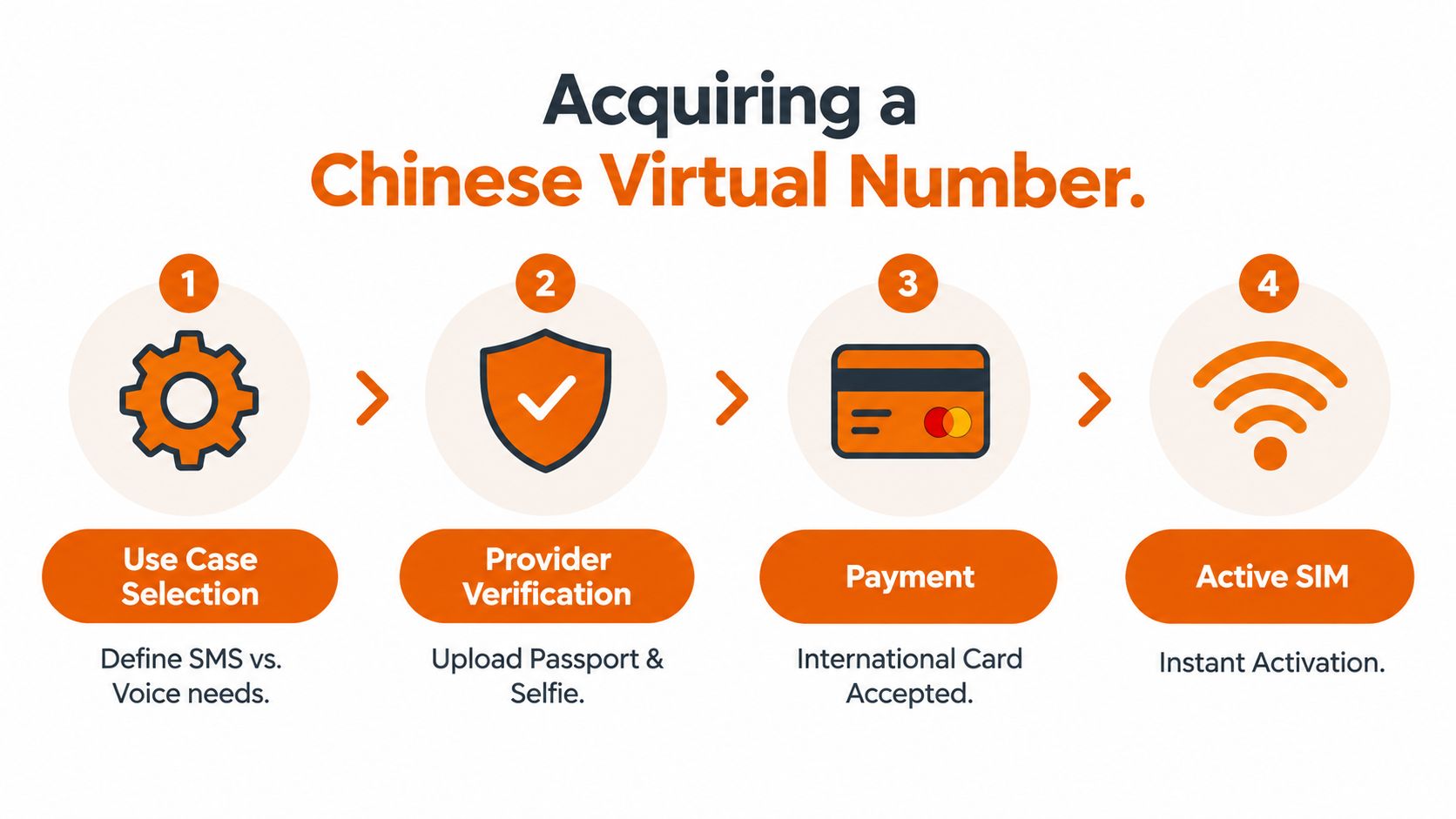
Start with the job, not the number. If you only need one verification code, your process can stay simple. If you need the number to support account recovery, messaging, or voice, you need a stricter setup from day one.
A workable acquisition sequence
- Define the use case. Decide whether you need SMS only, or SMS plus voice and long-term access.
- Check the termination model. Ask whether the provider uses carrier-backed delivery or a lighter aggregation layer.
- Review the registration rules. Make sure you understand what identity data is required before payment.
- Set up number management. Assign each number to one function, and keep records of where it's used.
The operational mistake many teams make is sharing one number across too many systems. That creates confusion the first time a password reset or anti-fraud check appears. A dedicated number for each critical function is much easier to recover and much easier to audit.
Keep the number useful after signup
Account creation is the easy part. Keeping access is where teams get burned. Maintain a written inventory of which number is tied to which account, and keep fallback authentication methods active wherever possible. Don't make the virtual number your only recovery path.
If you need a visual summary of the workflow, this process map is a good reference.
Common Misconceptions About Chinese Virtual Numbers
The most dangerous myth is that a rented number makes you anonymous. It doesn't. Real-name registration has been part of China's mobile environment for years, and the newer cyber-ID direction makes direct anonymity even less convincing in practice. The number may conceal your personal SIM from a website, but it doesn't erase the provider layer, the carrier layer, or the possibility of reuse.
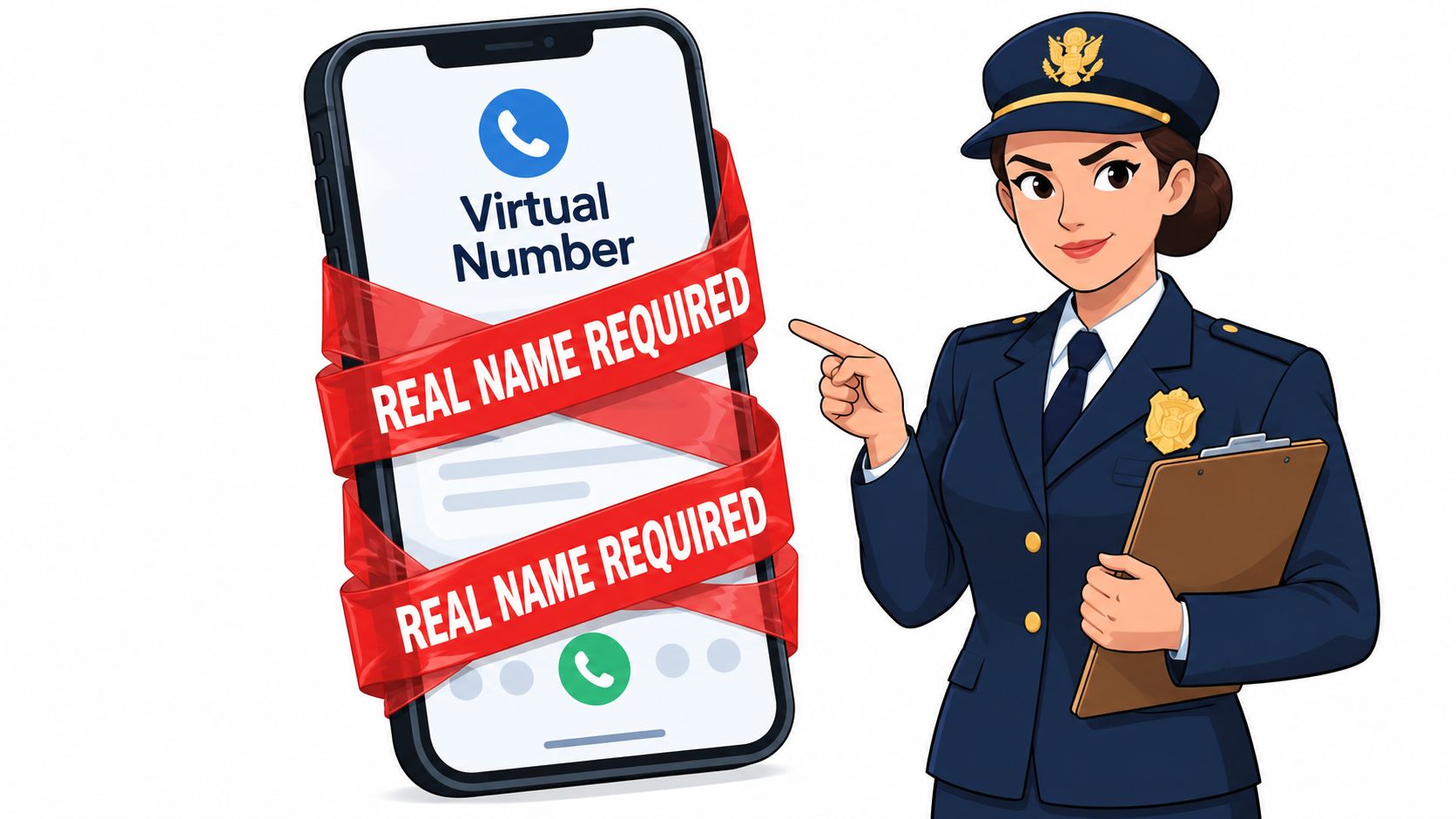
Three assumptions that break in real life
- “Any +86 number will work everywhere.” Platform controls vary, so one service may accept a number that another rejects.
- “A working OTP means the account is safe.” It only proves the message arrived, not that the account will survive recovery checks.
- “Virtual numbers are a cheap shortcut.” The actual cost shows up later in retries, account loss, and rebuild time.
There's also a category mistake that trips up foreign teams. A virtual number does not replace local presence for payment activation, government services, or regulated financial products. Those workflows can still require separate identity checks, linked bank details, or tighter compliance review.
Why the cheapest option often costs more
Public inboxes and recycled numbers look attractive because they're easy to access. They also create the worst recovery story, since you may not control the number long enough to get back into the account later. A cleaner provider with better documentation can look more expensive at checkout and still be cheaper over the life of the account.
That's the main lesson here. A number that receives a code once is not the same thing as a number you can build a business process around.
Building a Sustainable Chinese Number Strategy
A sustainable Chinese number strategy starts with a simple question: what are you trying to keep access to after the first SMS code arrives? That answer shapes everything else. A number that only works for a one-time verification can fail the moment a platform asks for ownership proof, recovery steps, or identity review.
The practical approach has three parts. Choose a provider with a clear compliance posture and transparent carrier relationships. Separate functions so one number handles verification, another handles voice, and a third handles long-term messaging if your workflow needs it. Plan for recovery before you depend on the number in production.
Keep the checklist focused on strategy, not vendor shopping:
- What identity data is collected, and why?
- Is this number dedicated to one business function?
- Does the account model support future ownership review or revalidation if the platform asks for it?
If any of those answers is unclear, the risk is probably higher than it looks. Chinese virtual numbers can work well, but they are not interchangeable with Western-style disposable lines. The teams that do well respect real-name rules, document ownership, and design for recovery instead of hoping a one-time code solves everything.