

How AI Mentions Shape Your Visibility Online
Search is changing. Instead of serving up a list of links, AI-powered answer engines now summarize information, recommend products, and cite sources directly in their responses. For businesses, this shift raises a critical question: are these systems talking about you, or are they sending potential customers to your competitors?
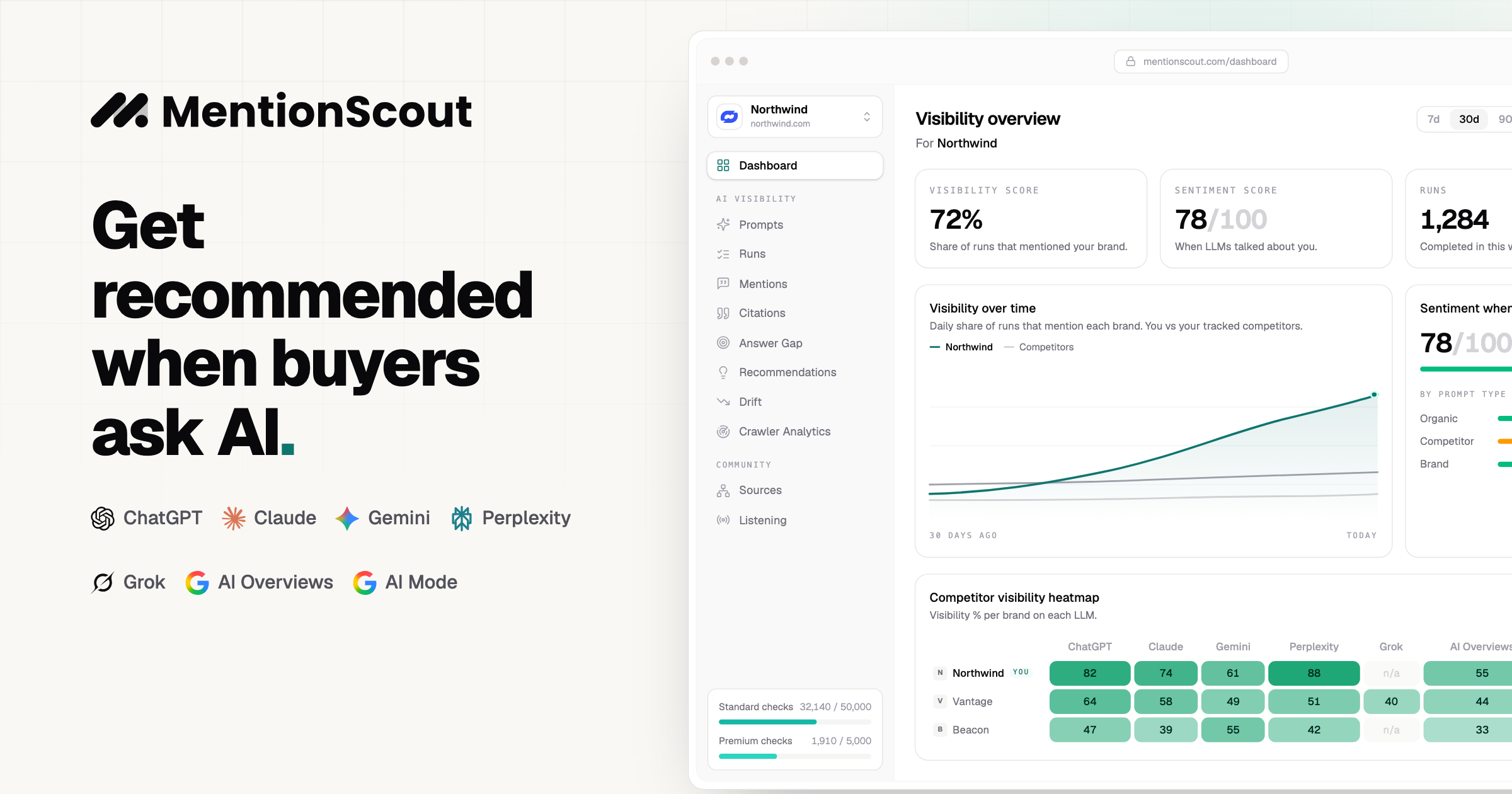
Traditional SEO tools don’t provide much visibility into this new landscape. That’s why tracking AI mentions has become essential. By running the kinds of questions buyers typically ask into platforms like ChatGPT, Claude, Perplexity, Gemini, Grok, and Google’s AI Overviews, you can see whether your brand is mentioned, how often it appears compared to competitors, and which sources are being cited. This isn’t just about knowing you exist in the conversation—it’s about understanding the context and the competitive dynamics behind those mentions.
One of the most valuable aspects of this approach is citation tracking. When AI engines answer questions, they often pull directly from specific pages or publications. Knowing exactly which sources are quoted tells you where coverage matters most. If engines consistently cite certain sites in your category, those are the places where earning visibility can lead to recommendations. In other words, citation tracking points you toward the publications and domains that influence AI-generated answers.
Competitive analysis adds another layer of insight. By comparing how often AI engines recommend you versus your competitors, you can measure share of voice in this new environment. Watching that gap change over time helps teams understand whether their efforts are paying off. If your mentions increase while a competitor’s decline, it’s a clear sign your strategy is working.
Social listening is also part of the picture. Communities like Reddit, Hacker News, and Bluesky are frequently referenced by AI systems when forming answers. Tracking mentions in those spaces helps you see how conversations in public forums influence AI-generated responses. It’s a way to connect grassroots discussions with algorithmic visibility, showing how community chatter can ripple into search recommendations.
Finally, crawler and referral analytics tie everything back to traffic. AI bots are actively crawling websites, and AI engines can send visitors directly to your pages. By monitoring which bots visit and how much traffic arrives from AI referrals, you can connect visibility to real outcomes. This closes the loop: mentions lead to citations, citations lead to recommendations, and recommendations can drive visits.
Together, these features create a comprehensive view of AI visibility. You’re not just tracking mentions; you’re mapping the ecosystem of citations, competitors, communities, and traffic. For founders, marketers, and SEO teams, this is the kind of intelligence that shows whether AI search is sending customers your way. As AI continues to reshape discovery, having tools that measure presence across platforms is becoming essential.


